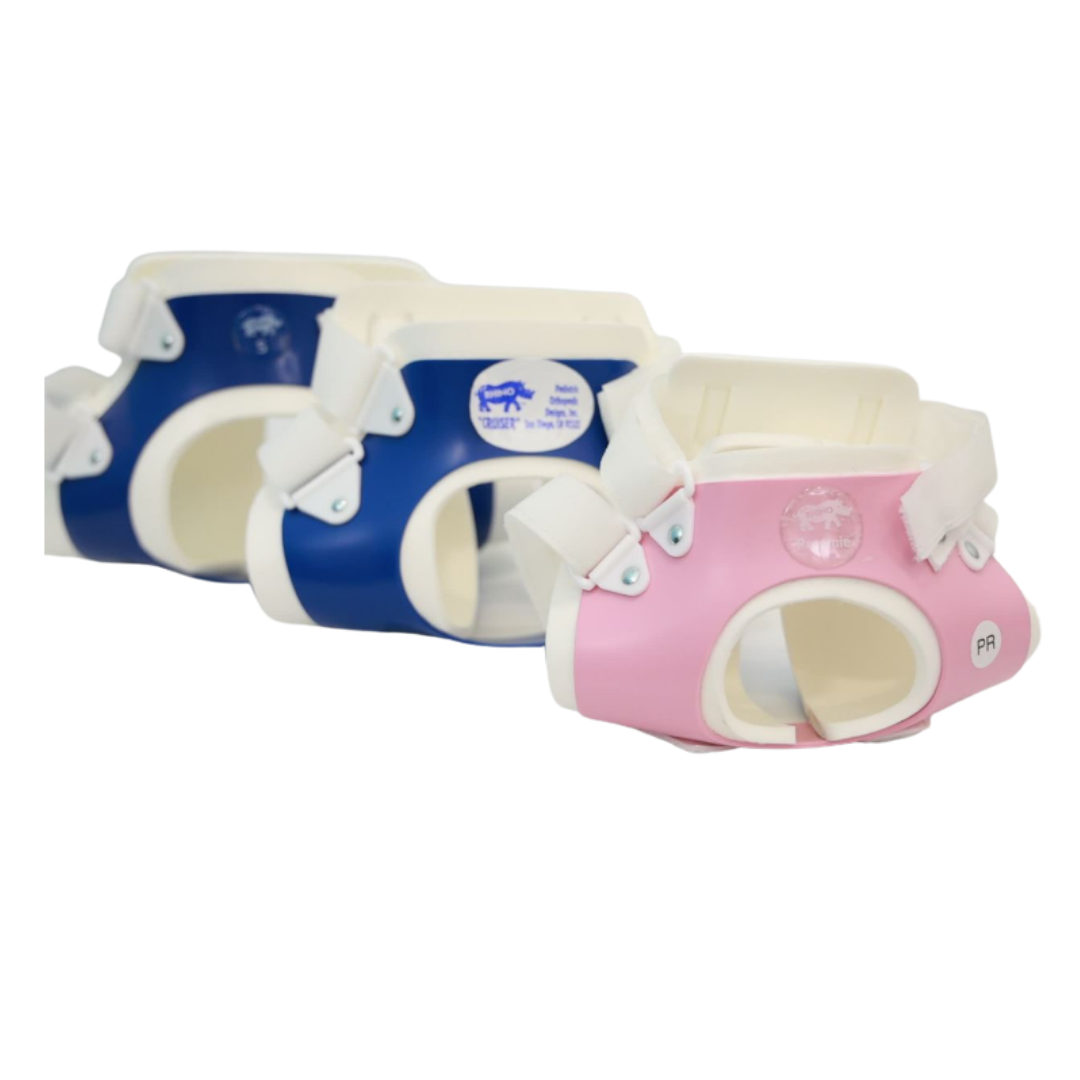
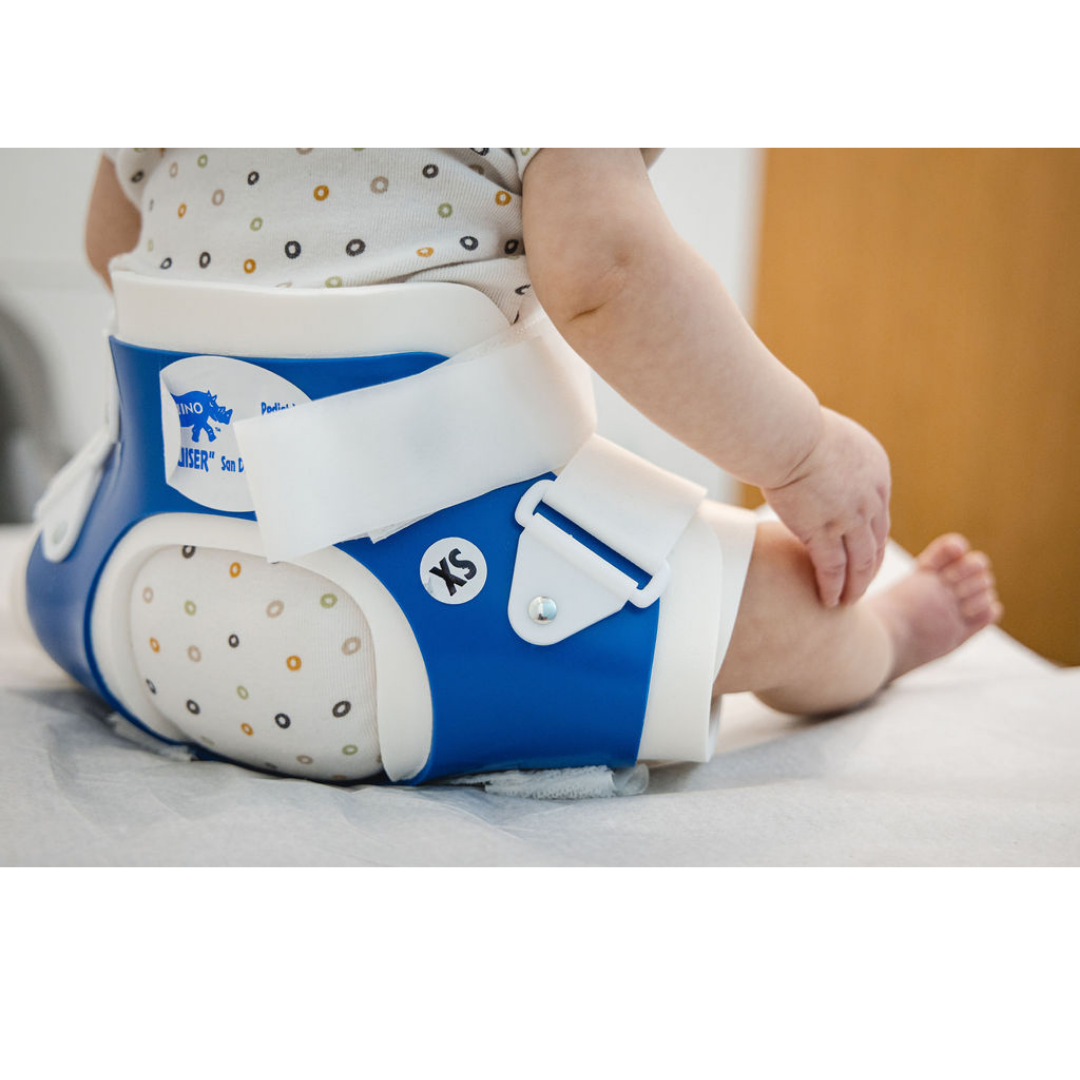
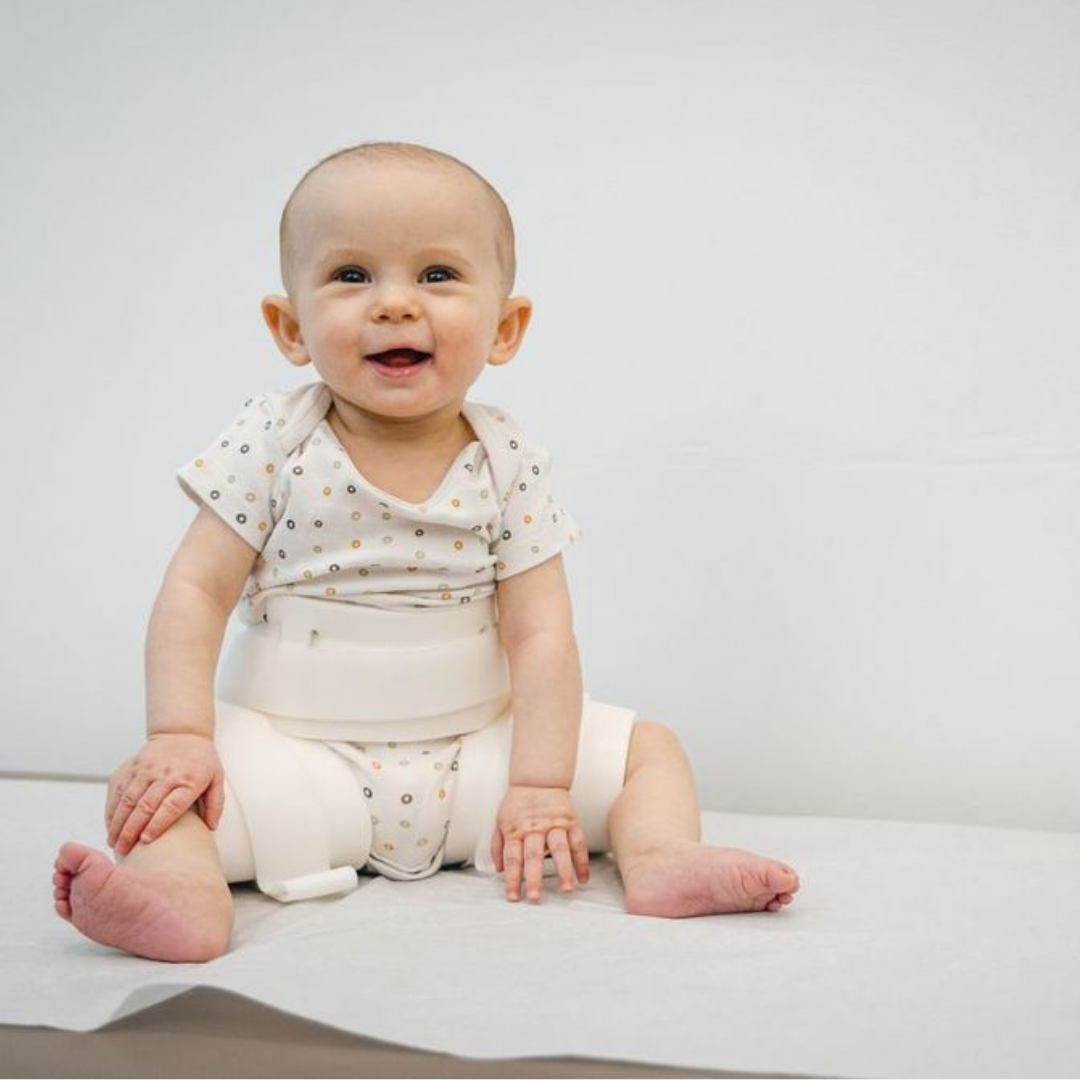
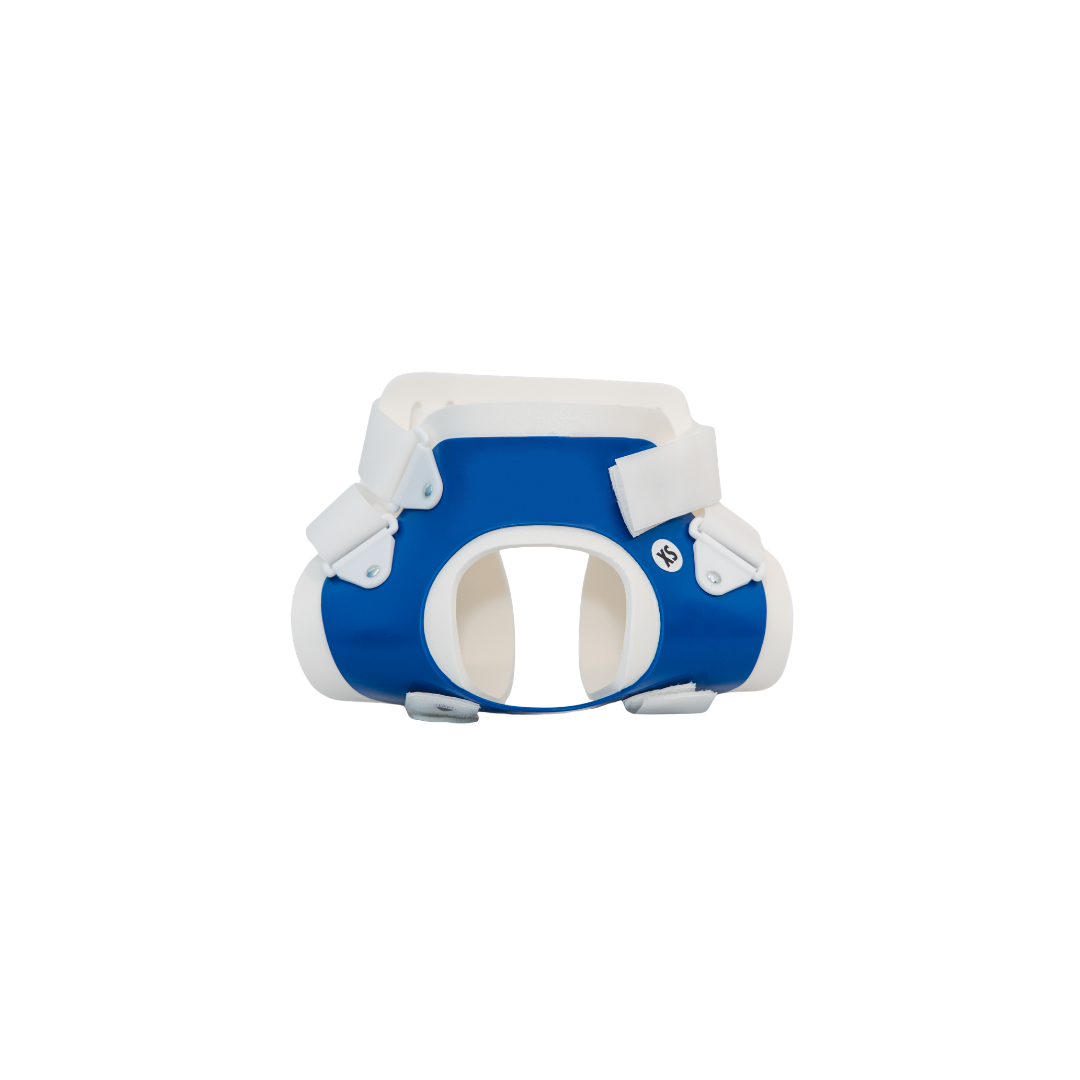

Can seamlessly integrate into your child’s routine, whether it’s for full-time wear during the day or exclusively for night-time and naptime use.
Light weight durable plastic shell lined with closed-cell foam.
Designed to be simple to apply and easy to clean, making it convenient for everyday use.
Unlike Pavlik harnesses (which have decades of focused clinical data), the Rhino® Cruiser and similar static braces have fewer large clinical trials. Much of the available evidence comes from caregiver surveys, device use instructions, and broader bracing reviews in Developmental Dysplasia of the Hip (DDH) literature. This means clinicians rely on clinical experience, imaging outcomes (ultrasound/X-ray), and patient-specific factors when choosing and monitoring bracing treatment.
Dynamic and Static Splinting for Treatment of Developmental Dysplasia of the Hip: A Systematic Review.
Pavone V, de Cristo C, Vescio A, Lucenti L, Sapienza M, Sessa G, Pavone P, Testa G. Children (Basel). 2021 Feb 4;8(2):104. doi: 10.3390/children8020104. PMID: 33557053; PMCID: PMC7913860.
Are there biomechanical studies supporting how the Rhino Brace affects hip position or muscle activity?
Biomechanical studies comparing orthotic devices (including Rhino-style braces) show that braces influence hip angles and lower-extremity muscle activity in infants — data that help explain their therapeutic positioning effect — though such studies are experimental and not large randomized clinical trials
Exploring infant hip position and muscle activity in common baby gear and orthopedic devices
Siddicky SF, Wang J, Rabenhorst B, Buchele L, Mannen EM. Exploring infant hip position and muscle activity in common baby gear and orthopedic devices. J Orthop Res. 2021 May;39(5):941-949. doi: 10.1002/jor.24818. Epub 2020 Jul 31. PMID: 34566253; PMCID: PMC8462515.
What types of DDH cases are best suited for Rhino Cruiser bracing?
Rhino Cruiser braces are typically used for stable hips with residual dysplasia, post-Pavlik harness treatment, or when children are older and need a semi-rigid abduction device. There’s less evidence supporting use for unstable or dislocated hips without prior stabilization.
Pavone V, de Cristo C, Vescio A, Lucenti L, Sapienza M, Sessa G, Pavone P, Testa G. Dynamic and Static Splinting for Treatment of Developmental Dysplasia of the Hip: A Systematic Review. Children (Basel). 2021 Feb 4;8(2):104. doi: 10.3390/children8020104. PMID: 33557053; PMCID: PMC7913860.
Is there evidence comparing Rhino Cruiser to other braces (like Pavlik harness)?
Survey evidence indicates that while all braces (Pavlik, Rhino, Denis Browne) scored positively in caregiver experience, Rhino braces were generally perceived as slightly easier to use than Pavlik harnesses, with fewer complaints about complexity of adjustment.
Grzybowski G, Bliven E, Wu L, Schaeffer EK, Gibbard M, Zomar BO, Casagrande Cesconetto A, Mundy C, Mulpuri K; International Hip Dysplasia Registry Knowledge Translation Advisory Board. Caregiver Experiences Using Orthotic Treatment Options for Developmental Dysplasia of the Hip in Children. J Pediatr Orthop. 2023 Feb 1;43(2):105-110. doi: 10.1097/BPO.0000000000002312. Epub 2022 Dec 5. PMID: 36607922; PMCID: PMC9812410.
How do caregivers generally perceive using the Rhino Brace?
Survey data indicate caregivers generally find the Rhino brace easy to use and positive overall, comparable to other DDH orthotics, though some note discomfort or challenges with fit. Caregivers favored Rhino braces over some other orthotics (e.g., Pavlik harness) for ease of use
Grzybowski G, Bliven E, Wu L, Schaeffer EK, Gibbard M, Zomar BO, Casagrande Cesconetto A, Mundy C, Mulpuri K; International Hip Dysplasia Registry Knowledge Translation Advisory Board. Caregiver Experiences Using Orthotic Treatment Options for Developmental Dysplasia of the Hip in Children. J Pediatr Orthop. 2023 Feb 1;43(2):105-110. doi: 10.1097/BPO.0000000000002312. Epub 2022 Dec 5. PMID: 36607922; PMCID: PMC9812410.